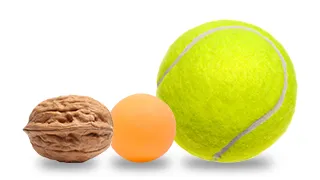
It’s tucked deep within the body, nestled between the bladder and penis, an elusive gland roughly the size of a Ping-Pong ball. Many people don’t know what, if any, purpose the prostate serves — most of what we hear about it revolves around the problems it can cause, especially later in life. But without it, there might not be any life at all.
In some ways, the male prostate gland is equivalent to the female mammary glands. Mammary glands are responsible for nourishing a child in the early stages of life; the prostate is responsible for protecting the sperm even earlier. It does this by producing an enzyme called prostate-specific antigen (PSA), which liquefies the semen, essentially freeing it from the seminal coagulum. PSA also gets credit for neutralizing the cervix’s blocking enzyme, which allows sperm to freely enter the uterus and, hopefully, penetrate the egg.
“The prostate gland, small as it is, is like a multifaceted diamond: every time you look at it from a different angle, under a different light, you see a different aspect of it, find a new scientific challenge, unresolved mysteries,” says urologist Dr. Claus Roehrborn, who specializes in prostate diseases and has chaired the University of Texas Southwestern Medical Center Department of Urology since 2002. His work is at the forefront of current innovations in treating and diagnosing prostate cancer.
The gland — which also helps control the flow of urine and produces ejaculate fluid — averages about 30 grams in size in adult men, and is usually smaller in younger men (think about the size of a walnut) and larger in older men (anywhere from the size of a Ping-Pong ball to a tennis ball).